
Kedarnath Temple Guide 2026: Darshan, Waiting Time, Booking & Travel
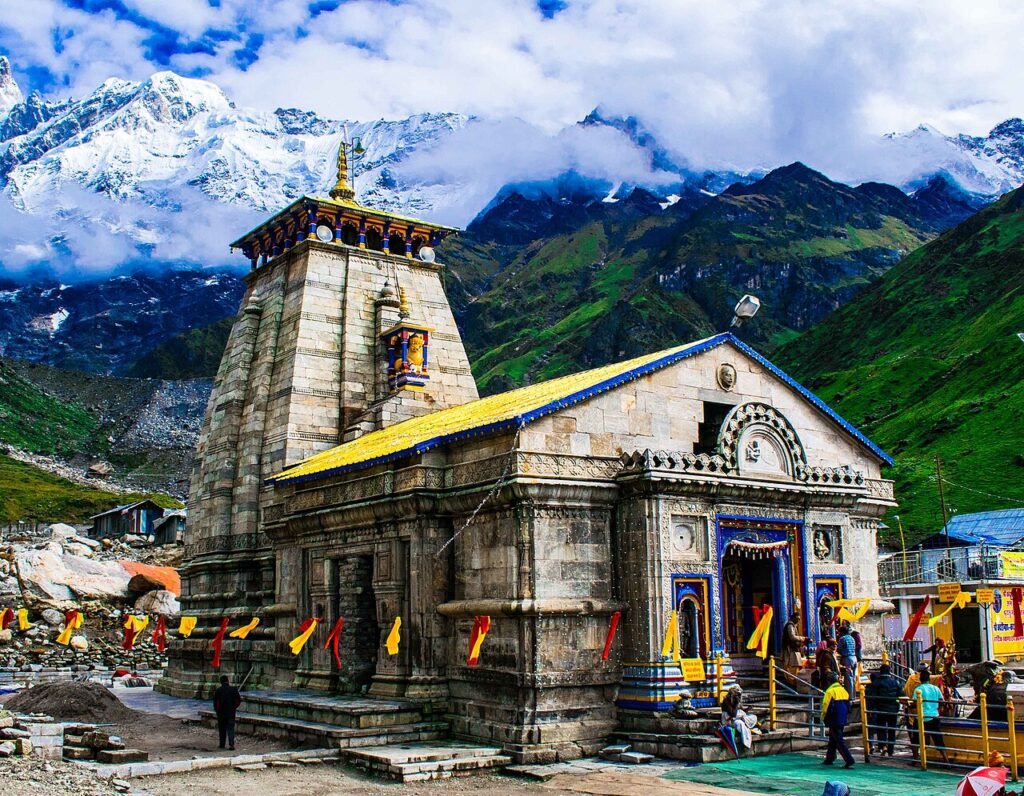
Image Credit: Shivam Kumar 766 via Wikimedia Commons (CC BY-SA 4.0).
Quick Overview
- Typical Waiting Time in Kedarnath Temple: 1-3 Hours
- Best Darshan Option in Kedarnath Temple: Free Darshan
- Best time to visit Kedarnath Temple : Start trek by 4:00 AM
Quick Introduction to Kedarnath Temple
Kedarnath Temple, dedicated to Lord Shiva, sits at an altitude of approximately 11,755 feet above sea level in the Garhwal Himalayan range. The temple is part of the Char Dham pilgrimage circuit, one of the four holiest journeys in Hinduism, and is also counted among the twelve Jyotirlingas. The temple remains open only for about six months a year, typically from late April or early May to November, due to heavy snowfall during winter. The temple is visited by hundreds and thousands of devotees each year.
What makes Kedarnath unique
- It is one of the twelve Jyotirlingas and also part of both Char Dham and Panch Kedar circuits, a rare triple honour.
- The temple is built of massive grey stone slabs without mortar, surviving for over 1,200 years in extreme weather.
- It survived the devastating 2013 flash floods almost untouched, protected by a giant boulder now called Bhim Shila.
- The chief priest (Rawal) has traditionally been from Karnataka’s Veerashaiva community for generations.
Why Kedarnath is a must visit
- A visit is considered a once-in-a-lifetime act of faith that washes away sins.
- You experience divine solitude — no roads reach the temple, only mountains and silence.
- The trek itself is a spiritual cleanse, walking the same path as the Pandavas from Mahabharata legend.
- Witness the morning aarti at 4 am with bells echoing in the Himalayan valley.
2026 Kedarnath Temple Timings and Daily Schedule
| Session | Notes |
| Morning Darshan (4:00 AM – 9:00 AM) | Best for less crowd, after morning aarti |
| Temple Closed (9:00 AM – 3:00 PM) | For special puja and bhog, sanctum cleaned |
| Evening Darshan (3:00 PM – 9:00 PM) | Main rush time, beautiful sunset views |
| Special Aarti (6:30 PM – 7:30 PM) | Evening aarti, attend from mandap |
The temple opens on Akshaya Tritiya and closes on Bhai Dooj. During closing, the idol is carried in a palanquin to Ukhimath’s Omkareshwar Temple for winter worship.
Kedarnath Darshan and Puja Options Price List-2026
All bookings are via the Badri-Kedar Temple Committee (BKTC) website.
| Puja / Darshan | Price 2026 | Duration |
| General Darshan (Booking: On arrival) | Free | 1–2 hours wait |
| VIP Darshan (Booking: Online) | Rs 550 | 30 min |
| Rudrabishek (Booking: Online) | Rs 1,100 | 30 min |
| Laghu Rudrabishek (Booking: Online) | Rs 2,500 | 1 hour |
| Maha Rudrabishek (Booking: Online) | Rs 5,500 | 2 hour |
| VIP with Aarti (limited slots) | Rs 2,100 | 1 hour |
Pro Tip: If budget is not a constraint, opt for Maha Rudrabhishek. It is considered very powerful and is believed to help devotees seek inner strength and peace of mind
Kedarnath 2026 Waiting Time and Crowd Guide
| Period | Temple Wait Time | Advice |
| May–June (Opening) | 3–5 hours | Start trek 3 am |
| July–August (Monsoon) | 1–2 hours | Avoid if possible |
| September–October | 2–3 hours | Ideal time |
| Late October–Closing | 1 hour | Carry heavy woollens |
During peak days in May and June, over 20,000 pilgrims reach daily. The queue starts 500 metres before the temple. VIP darshan cuts wait to under 30 minutes.
What most first-time visitors miss
Hire ponies directly from Gaurikund and not from Sonprayag. Taking ponies from Sonprayag results a much longer, uncomfortable journey.
Best Darshan Strategy for you
- Short on time or health issues: Take helicopter from Phata (Rs 5,500 return) + VIP darshan Rs 550. You finish in 4 hours total.
- On a budget: Walk the 16 km trek and take free general darshan. Start at 4 am from Gaurikund to avoid crowds.
- Premium spiritual: Book Maha Rudrabhishek Rs 5,500 at 4 am. You sit inside the sanctum during abhishek.
- For families: Take pony (Rs 2,500 one way) up and walk down to save knees.
Kedarnath Trek Strategy
Start from Gaurikund by 4–5 am and walk 6-7 kms to Rambara area (half way). Take frequent breaks on the way and reach Kedarnath by 12-2 PM. Stay overnight in Kedarnath to enjoy early morning views and return by noon
Kedarnath Yatra Pro Tips
- Spend 1 night in Guptkashi/Sonprayag to avoid altitude sickness
- Start trek before 5:00 am for best weather
- Helicopter saves 6-8 hours but weather-dependent
- Carry raincoat – weather changes quickly
- Book GMVN stays 60 days in advance
Helicopter vs Trek – What to Choose?
- Trek: Spiritual, challenging, full experience (6–8 hrs)
- Helicopter: Quick (10 min flight), expensive, weather dependent
One Day Kedarnath plan
This is tough but possible with helicopter. Take 6 AM heli from Phata to Kedarnath. Reach by 6:15 am, darshan by 8 am. Visit Bhim Shila and Adi Shankaracharya samadhi behind temple. Take 2 PM return heli to Phata. Drive back to Guptkashi for night halt. This avoids the strenuous trek and high-altitude overnight stay.
Kedarnath in Limited Time: 2-Day Plan
Day 1: Drive to Sonprayag, stay overnight. Day 2: Start trek 4 am from Gaurikund, reach Kedarnath by 11 am via pony. Darshan 12–2 pm, stay overnight in GMVN hut. Day 3: Morning aarti 4 am, trek down by 10 am. This gives you acclimatization and avoids altitude sickness.
Kedarnath vs Badrinath: Char Dham Comparison
| Feature | Kedarnath | Badrinath |
| Deity | Lord Shiva (Jyotirlinga) | Lord Vishnu |
| Altitude | 11,755 feet | 10,279 feet |
| Trek | 16 km steep trek | Road reaches temple |
| Open Season | May-Nov | May-Nov |
| Main Challenge | High altitude, cold | Crowds |
| Best For | Shiva devotees, trekkers | Families, seniors |
Combine both Badrinath and Kedarnath to get blessings from both Vishnu and Shiva
Kedarnath Dress Code and Entry Rules
- Registration on Uttarakhand Char Dham portal is mandatory for all pilgrims.
- Wear heavy woollen layers, thermal inner, waterproof jacket, and woollen cap — temperature drops to -5°C even in May.
- Wear high-ankle trekking shoes with good grip. Strictly avoid sports shoes and slippers.
- Carry a medical certificate if you are over 65 or have heart issues — checked at Sonprayag.
Best Time to Visit Kedarnath Temple
May to June offers clear skies and accessible trails but is very crowded. September to October is the best balance — weather is cool, crowds are 40% less, and views are clearest after monsoon. Avoid July and August due to heavy rain and landslide risk on the mountain path. The temple closes in early November for winter; the closing date is decided on Bhai Dooj. For helicopter, book 90 days in advance for May-June.
How to Reach Kedarnath: Flight, Train, Road
- By Air: Nearest airport is Jolly Grant, Dehradun (239 km). From there, take a taxi to Sonprayag (8 hours). Helicopter services operate from Phata (8 km from Guptkashi), Sirsi, and Guptkashi helipads.
- By Train: Nearest major station is Rishikesh (216 km) or Haridwar (240 km). From there, take a shared taxi or bus to Sonprayag (8–9 hours).
- By Road: Drive to Sonprayag via Rudraprayag. Private vehicles stop at Sonprayag; from there take local jeep to Gaurikund (5 km). The 16 km trek starts at Gaurikund. The new route via Tarakote is not applicable here — Kedarnath has only one main trek.
Where to Stay Near Kedarnath Temple
At the base, stay in Guptkashi or Sonprayag — GMVN Tourist Rest House (Rs 1,500) or private hotels (Rs 2,500–4,000). Near the temple, only GMVN huts and tents are available — book on gmvn.in 60 days ahead. Options include dormitory beds (Rs 500), basic rooms (Rs 2,500), and deluxe huts with heater (Rs 4,500). Private hotels are not allowed near the shrine. Staying at Kedarnath is expensive but essential for morning aarti. Carry your own sleeping bag liner for hygiene.
Kedarnath Trip Cost Breakdown
| Expense | Cost (2026) |
| Helicopter Return (Phata) | Rs 5,500–7,800 |
| Pony One Way | Rs 2,500 |
| Palki (4 bearers) | Rs 8,000 |
| GMVN Hut at Kedarnath | Rs 2,500–4,500 |
| Budget Hotel Guptkashi | Rs 2,000 |
| VIP Darshan | Rs 550 |
| Meals per day | Rs 600–800 |
Kedarnath trip can be completed at an average cost of Rs 6,000 to 7,000 per person if pony and overnight options are chosen
Mistakes to Avoid at Kedarnath
- Attempting same-day return without acclimatization — leads to exhaustion and altitude sickness
- Trekking in jeans and sneakers — you will slip on ice and get frostbite.
- Not booking helicopter and GMVN 90 days in advance for May-June.
- Carrying heavy luggage — use mule service Rs 800 per bag.
- Ignoring weather updates — the 2013 disaster shows mountain weather changes in minutes.
- Skipping medical checkup if you have BP or asthma — oxygen is 40% less at 11,755 feet.
About Lord Kedarnath Deity
Lord Kedarnath is Lord Shiva worshipped as a Jyotirlinga in the form of a hump-backed bull. According to legend, after the Mahabharata war, the Pandavas sought Shiva for forgiveness. Shiva hid as a bull at Kedarnath, and when caught, he dived into the earth, leaving his hump on the surface. This hump is worshipped as the Shiva lingam. The deity is considered the lord of the Himalayas and the destroyer of sins. Unlike other temples, the lingam is irregular shaped natural rock, not man-made.
Where is Kedarnath Located?
Kedarnath Temple is located in the Rudraprayag district of Uttarakhand state, in North India. It sits at an altitude of 3,583 metres (11,755 feet) above sea level in the Garhwal Himalayan range, near the headwaters of the Mandakini River. It is about 223 km from Rishikesh and 16 km uphill from the motorable road at Gaurikund. The nearest town with full facilities is Guptkashi, 30 km downhill.
History and Architecture of Kedarnath
The current stone structure is widely believed to have been built by Adi Shankaracharya around 820 CE as part of his mission to revive Hinduism. He also attained samadhi behind the temple at age 32. However, worship here predates him by centuries, linked to the Pandavas. The temple is built in classic Himalayan stone architecture — massive grey stone slabs interlocked without mortar, designed to survive snow and earthquakes. It faces south with a small garbhagriha and a mandapa. The temple is administered by the Badrinath-Kedarnath Temple Committee. It miraculously survived the June 2013 flash floods, protected by a giant boulder now worshipped as Bhim Shila.
Temples Near Kedarnath to Visit
- Bhairavnath Temple: Located 500 metres south of Kedarnath, dedicated to the guardian of the shrine. Visit after Kedarnath darshan.
- Adi Shankaracharya Samadhi: Right behind the main temple, the memorial of the saint who rebuilt Kedarnath.
- Triyuginarayan Temple: 25 km from Sonprayag, where Lord Shiva and Parvati were married, with an eternal flame.
FAQs
When does Kedarnath open in 2026?
Around May 2 on Akshaya Tritiya; exact date announced in March.
How difficult is the trek?
16 km steep climb, takes 6–8 hours walking. Ponies and helicopters available.
Can senior citizens go?
Yes, via helicopter or palki, but medical certificate is mandatory.
Is there mobile network?
Only BSNL and Jio work patchily at Bhawan. No network on trek.
What is helicopter cost?
Rs 5,500–7,800 return from Phata/Sirsi/Guptkashi.
Do we need registration?
Yes, mandatory Char Dham registration on registrationandtouristcare.uk.gov.in.
Can we stay at Kedarnath?
Yes, only in GMVN huts and tents. Book 60 days ahead.
Is VIP darshan worth it?
Yes in May-June, saves 3–4 hours waiting
What to carry?
Heavy woollens, raincoat, medicines, torch, power bank, and dry fruits.